Passendale, one of Belgium’s best-known cheeses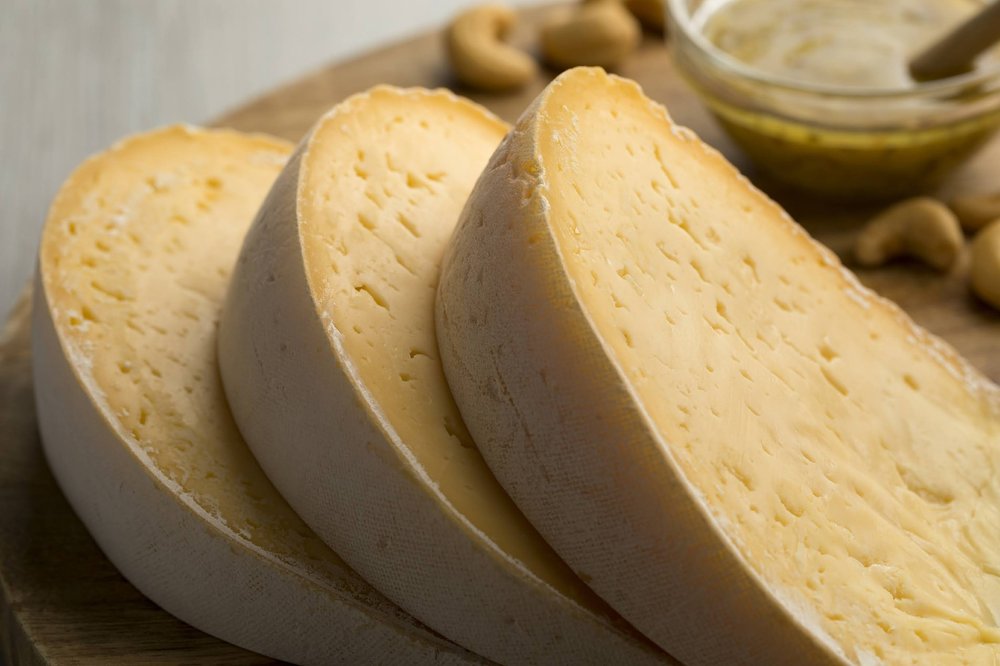
Belgium’s cheese tradition is less famous than its beer or chocolate, and it tends to live in the long shadow of its neighbors, France and the Netherlands. Yet cheese has always been part of Belgian food culture, just expressed more quietly. Historically, abbeys played a central role in cheese production, making cheese alongside beer as part of a self-sufficient monastic system, a tradition that still operates today.
Belgian cheesemaking is defined less by strict regional definitions than by a sense of freedom and variety. This flexibility is reflected in the fact that the country has just one cheese with Protected Designation of Origin, or PDO, status: Herve. Rather than limiting producers, the lack of rigid rules has become a strength, encouraging a surprisingly diverse cheese landscape that’s shaped by curiosity and craft over tradition alone. The cheeses below trace that evolution, from Herve’s farmhouse roots to abbey traditions and modern artisans.
Herve
Herve is Belgium’s only protected cheese. Photo credit Terre de Fromages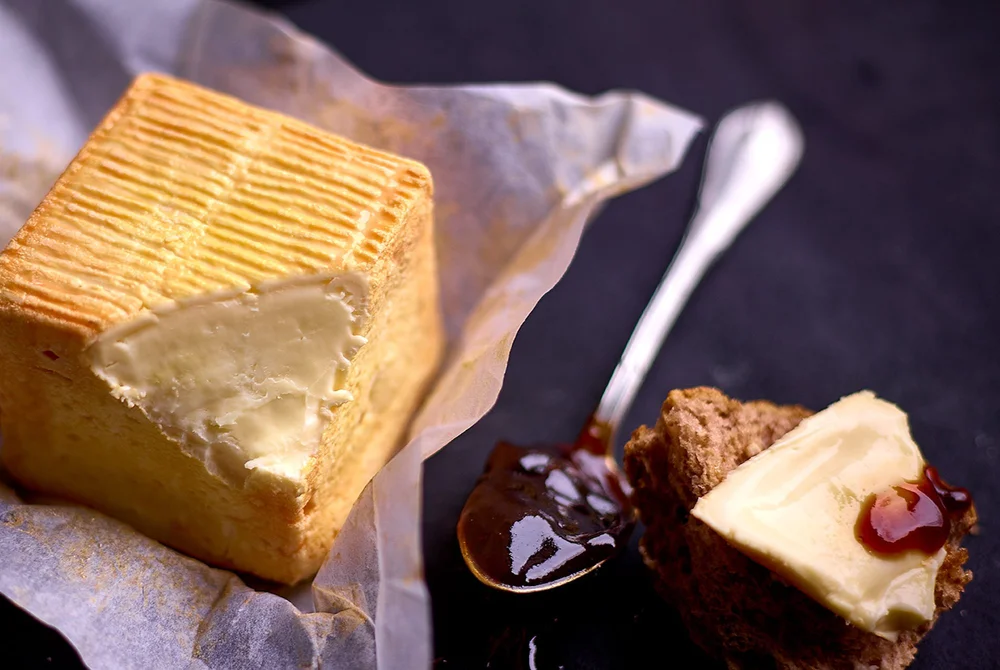
Belgium’s only PDO cheese, Herve, is traditionally made in the Pays de Herve in the eastern part of the country, near the German and Dutch borders. This washed-rind cow’s-milk cheese has been produced for centuries.
At the start of the 1900s, there were close to a thousand small producers making Herve in regional cellars, often for their own families. Today just a few remain, transforming what was once a daily farmhouse staple into a rare expression of Belgian cheese heritage.
During aging, the rind is repeatedly washed, giving Herve its sticky rind and powerful aroma. It is often compared to France’s Munster, though many consider it even more forceful, especially in the way it will perfume a refrigerator.
“It’s a cheese for cheese lovers,” Frédéric Van Tricht, a cheese affineur at Kaasaffineurs Van Tricht, a family-run cheese shop in Antwerp, says of Herve. “It’s a delicious cheese, but it’s a cheese that if you would serve it to somebody that has never had cheese before, they’d never have it again in their life.”
For those who accept the challenge, the cheese is traditionally enjoyed with crusty rye bread or potatoes. It also shines alongside dark Belgian beers, as the carbonation cuts through the fat and sweetness.
Passendale
Passendale is an everyday staple in Belgium. Photo credit Savencia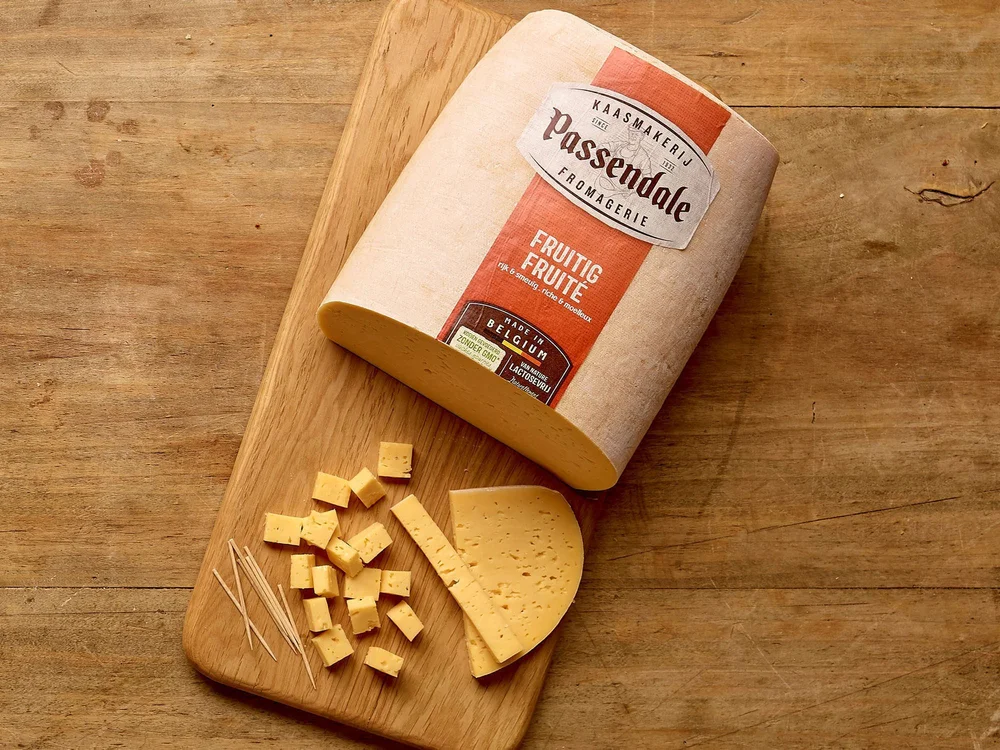
Passendale is a classic Belgian cow’s-milk cheese, named after the village in West Flanders where it originated. Its story begins in 1932, when the Donck family started producing cheese in Passendale, working closely with local milk producers. Originally sold under another name, it was rebranded as Passendale in 1980 and has gradually become a national staple.
Compared to Herve, Passendale is more approachable. It has a smooth, creamy texture and a mild, slightly nutty flavor. The cheese is sold in its signature wheel or loaf form, both with a lightly dusted rind that gives it a rustic appearance. Often served on cheese boards, in sandwiches, or melted into traditional dishes, Passendale pairs well with Belgian white beers. While it does not carry PDO status and is produced at scale today, it remains an everyday favorite in Belgian households.
Abbey-Style Cheeses
Maredsous Fagotin is an example of a Belgian abbey-style cheese
Belgium’s abbey-style cheeses reflect the country’s monastic heritage, where Trappist and Benedictine monks produced cheese alongside beer as part of a self-sufficient lifestyle. While only some are still made in actual abbeys, these cheeses continue to carry the flavor traditions and techniques of monastic cheesemaking.
Orval, produced at the Trappist Abbey of Orval in the Gaume region, traces its roots to 1816, though production in its current form began in 1928. Made from pasteurized cow’s milk sourced from nearby farms, the cheese is shaped into loaf-like blocks, brined, and hand-washed to develop its natural rind. Semi-firm yet creamy, it has a mild saltiness similar to a Gouda. Orval is traditionally paired with the abbey’s beer and rustic bread.
Chimay, from Scourmont Abbey, is produced at the same monastery that brews Chimay beer. In some versions, the rind or curds are washed with Chimay ale for yeast-forward, malty flavors. Other versions have a cleaner, creamier profile with notes that may remind you of crusty bread. Both styles pair naturally with Chimay beers and cured meats.
Maredsous, which follows classic washed-rind techniques, comes from Maredsous Abbey in the province of Namur. While small-scale production still takes place at the abbey, most Maredsous is now produced industrially by Groupe Bel, with aging carried out in cave-like environments to preserve traditional textures and flavors. The cheese exists in several versions, even at the abbey, including a classic style, smoked, fresh, and the log-shaped Fagotin.
Bouquet des Moines. Photo credit Fromages de l’Abbaye du Val-Dieu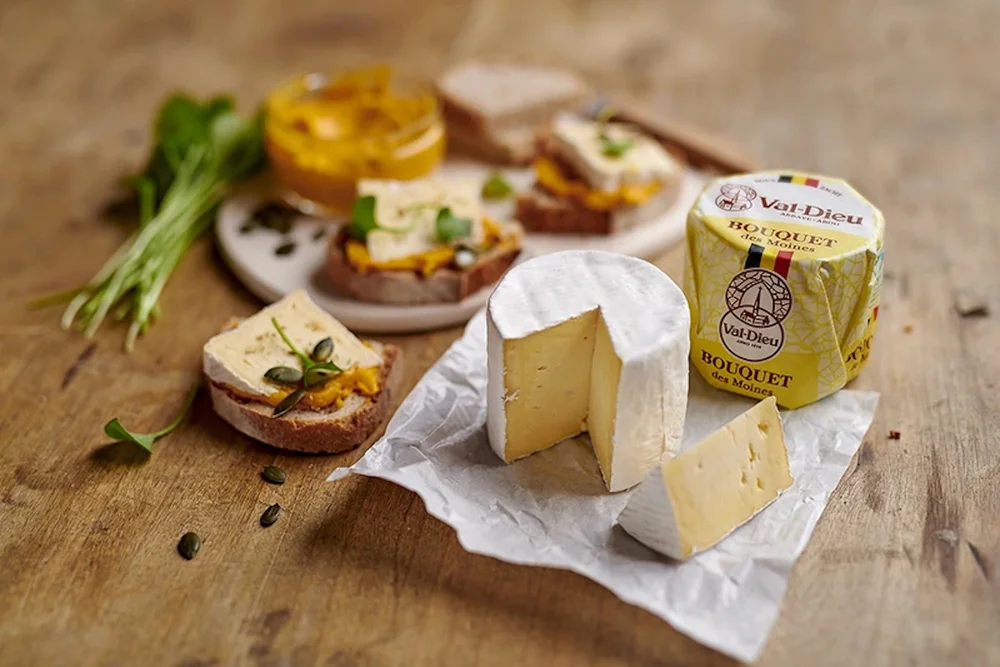
Bouquet des Moines was created at the request of the Cistercian monks of Val‑Dieu Abbey, and inspired by traditional monastic cheesemaking. Today, it’s produced and aged by the regional dairy Terre de Fromages, keeping to those classic flavor profiles. Made from cow’s milk, it typically features a washed or natural rind for depth during aging and is most often enjoyed sliced with charcuterie or melted.
Gouda-Style Cheeses
Flandrien Kaas is one example of Belgian Gouda-style cheese. Photo credit Ji-Elle via CC BY-SA 4.0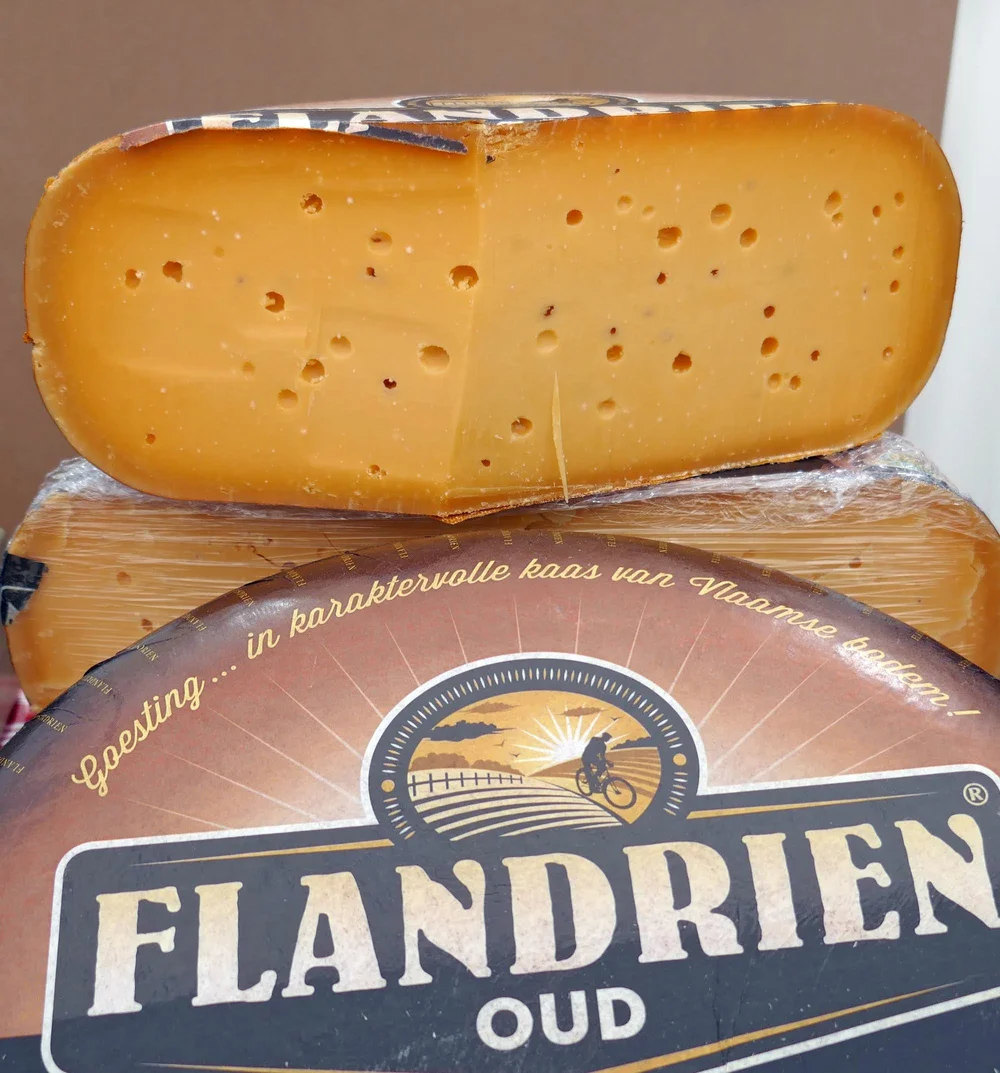
Gouda-style cheeses have become popular across Flanders, where producers like Flandrien Kaas adapt Dutch traditions to local milk and affinage preferences. Unlike many Dutch goudas, which are often standardized and produced in large wheels for export, Belgian versions emphasize variation, aging, and creative expression.
Young Belgian varieties tend to be mild, buttery, and elastic, while longer-aged versions develop firmer textures and caramelized notes. Depending on the dairy, rinds may be natural or washed, and some cheeses incorporate spices or herbs. These cheeses are widely used at the table, on boards, or melted into Belgian cooking.
Damse Mokke
Damse Mokke. Photo credit Damse Kaasmakerij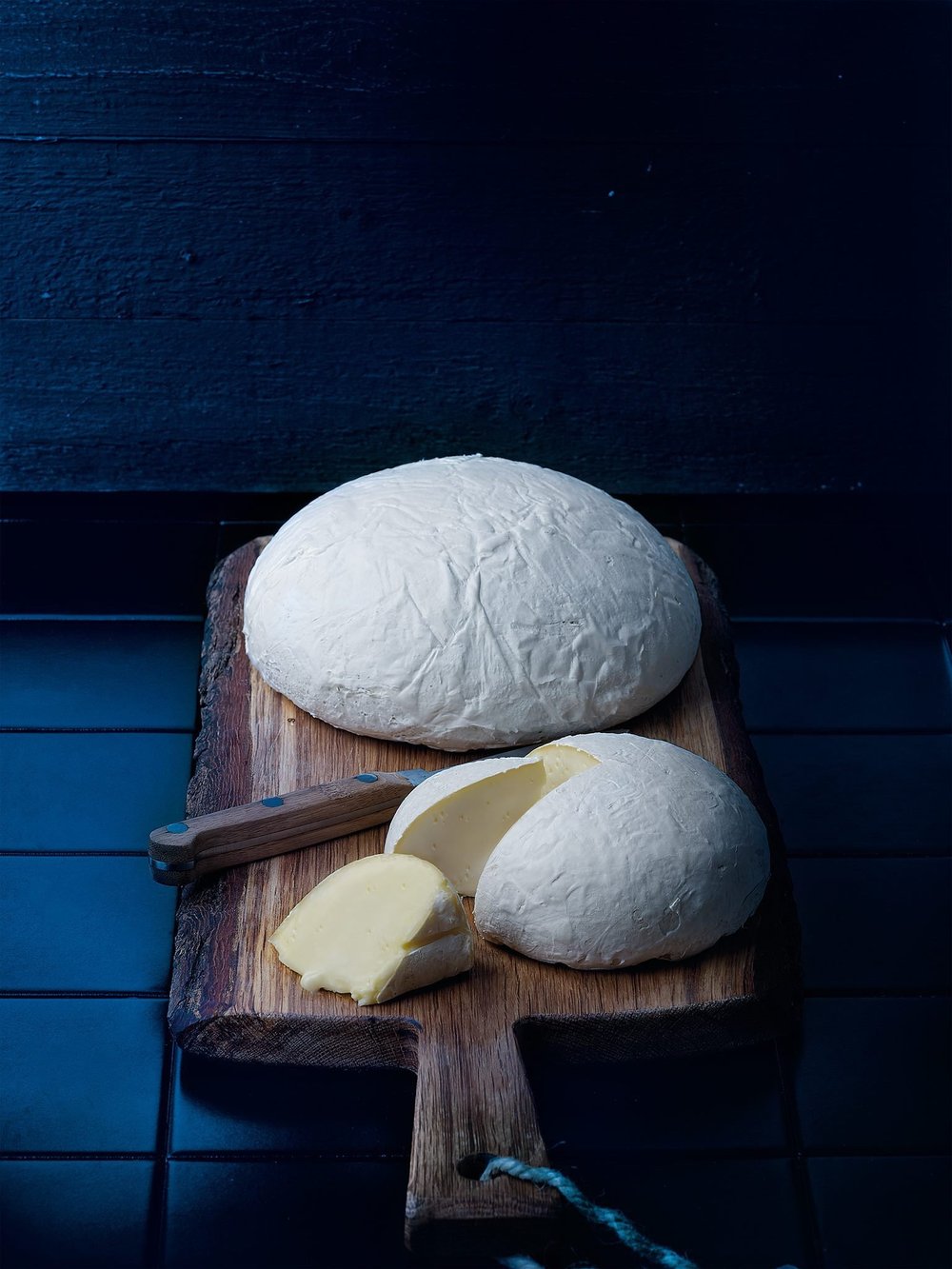
Damse Mokke is a small, half-round organic soft cheese with modern origins. In 1985, Lode Vanhoutte began experimenting with cheesemaking in his mother’s kitchen near Bruges, inspired by local milk surpluses and family traditions. Production later moved to the family farm in Damme and eventually to Sijsele, where Damse Kaasmakerij operates today.
The name combines the town of Damme with mokke, a local dialect word meaning “beautiful young girl.” Made from pasteurized, organic cow’s, goat’s, or sheep’s milk, Damse Mokke is molded, brined, and matured in a humid environment for about two weeks, reaching peak flavor after six weeks. It features a delicate white mold rind and a mild, creamy interior.
Carla de Bruijckere of Damse Kaasmakerij notes that while flavor intensity increases with age, the cheese remains gentle and accessible. It works well on cheese boards, as tapas, or added to soups and salads.
Pas de Bleu
Pas de Bleu. Photo credit Het Hinkelspel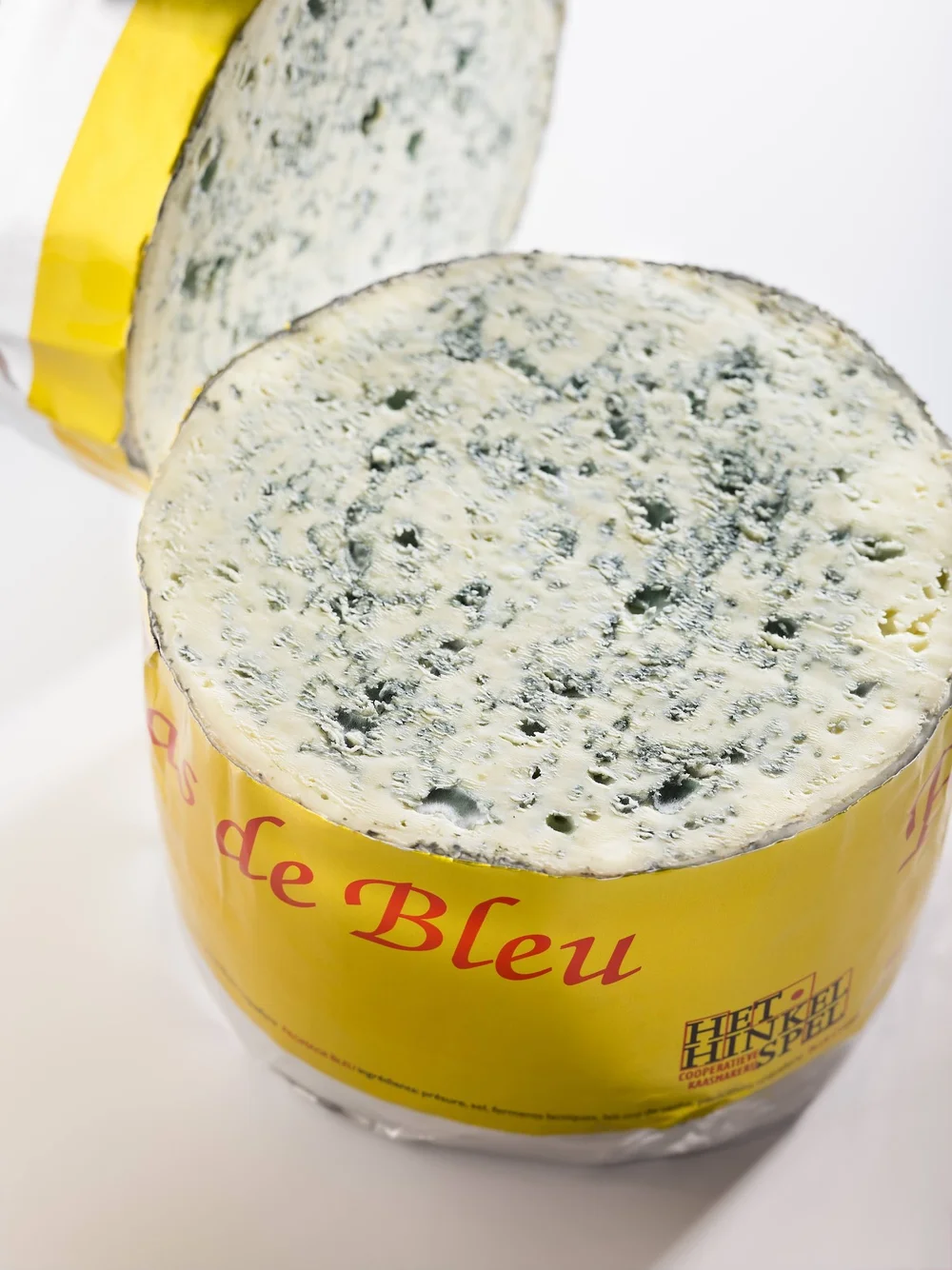
Pas de Bleu holds a special place in Belgian cheesemaking as the country’s first true blue cheese. It was created about 40 years ago and arrived at a time when Belgium had no tradition of producing blue cheeses. Developed by the cooperative Het Hinkelspel, Pas de Bleu began as a hobby among friends and students in the early 1980s and evolved into a well-known artisanal product. The cheese, which is made from cow’s milk, has a creamy yet firm texture, with the characteristic salty tang and blue veining that make it recognizable as a blue cheese. According to Floris Lepercq, Export Manager at Het Hinkelspel, Belgian consumers have grown increasingly open to domestic blue cheeses rather than relying solely on imports such as Roquefort.
The cheese is traditionally paired with either strong Belgian beers like Westvleteren 12 or Chimay Blue to balance the intensity of the cheese, or with stouts to play off their coffee and chocolate notes.
The Artisanal Scene
Belgium’s cheese scene is much bigger than these examples. In recent decades, artisanal producers have expanded the country’s offerings, experimenting with goat’s milk lactic cheeses, innovative blues, and bloomy rinds shaped by local environments.
Family-run dairies like Karditsel in Lummen produce internationally respected organic goat cheeses, including lactic styles with sunset-colored rinds and carefully layered flavors. On the Belgian coast, Cru du Nord operates a harborside dairy producing cheeses inspired by the sea. Neptune, for example, is a bloomy-rind cheese made from cream-enriched cow’s milk.
Van Tricht emphasizes the role of affineurs and retailers in sustaining this movement. “For us, the most important thing of our job is to protect the artisanal producer, make sure they receive a fair price, keep them passionate, and also tell their stories. We don’t sell cheese; we sell stories of artisanal producers that work every day, very hard, to make good cheese.”
This philosophy is reflected in Belgium’s growing network of specialty cheese shops, where trained professionals guide customers through local selections and help ensure artisanal cheeses reach a wider audience.
Where to Find Belgian Cheeses
Finding most Belgian cheeses outside of Belgium can still be a challenge. Many of the country’s artisanal cheeses are tied closely to local producers and small-scale distribution. While some cheeses, particularly abbey-style or gouda-style varieties, may appear in specialty shops internationally, the freshest and most flavorful options are often found locally at Belgian markets, cheese shops, and through the producers themselves. As awareness of Belgium’s cheesemaking heritage grows, broader availability outside the country is likely to follow.